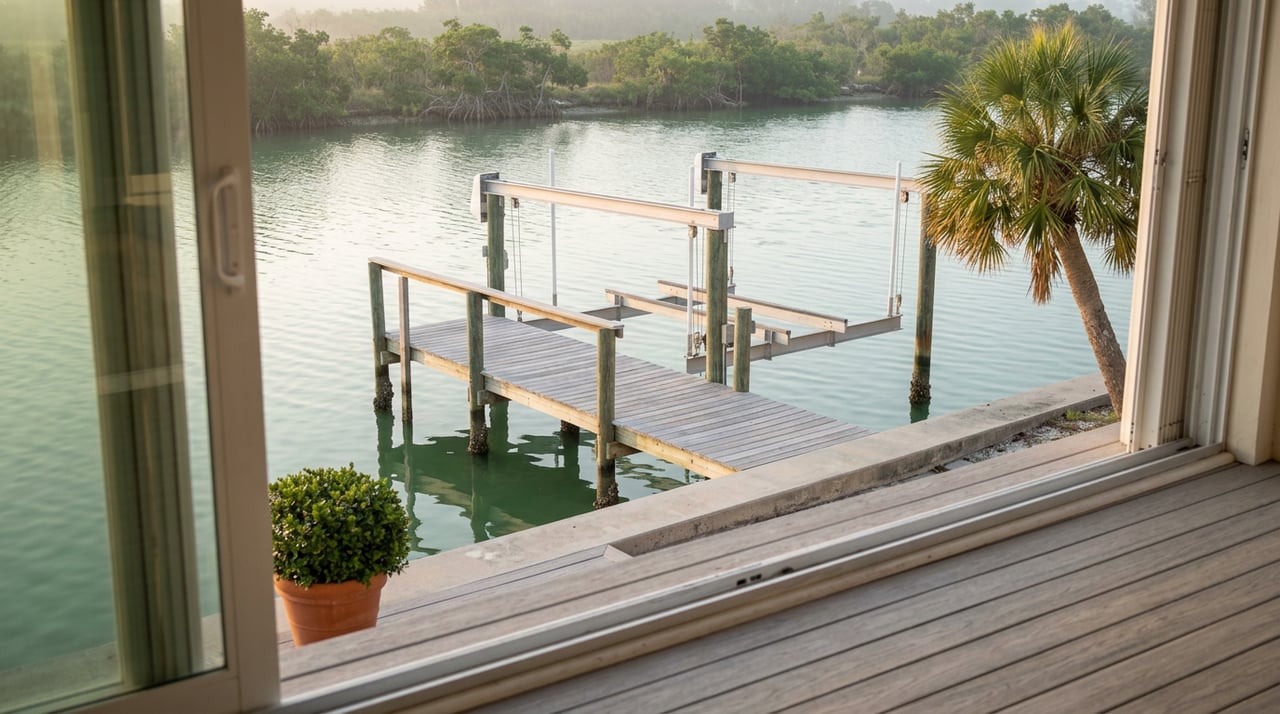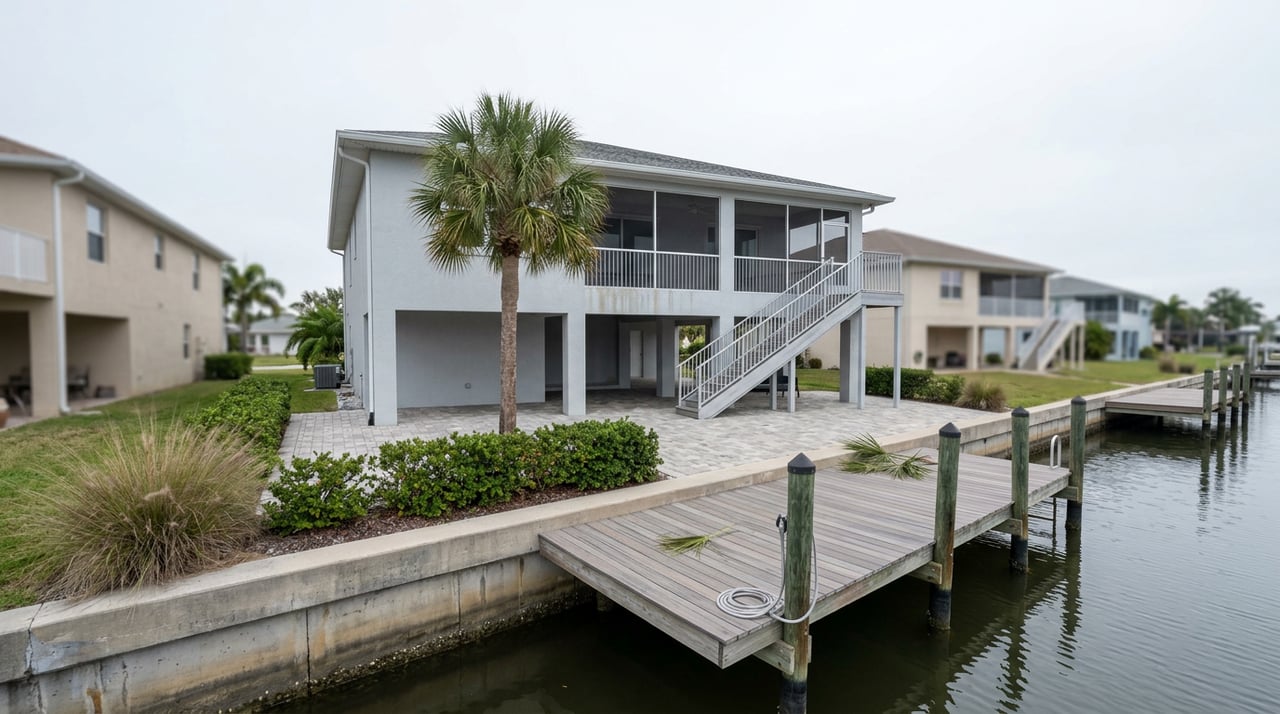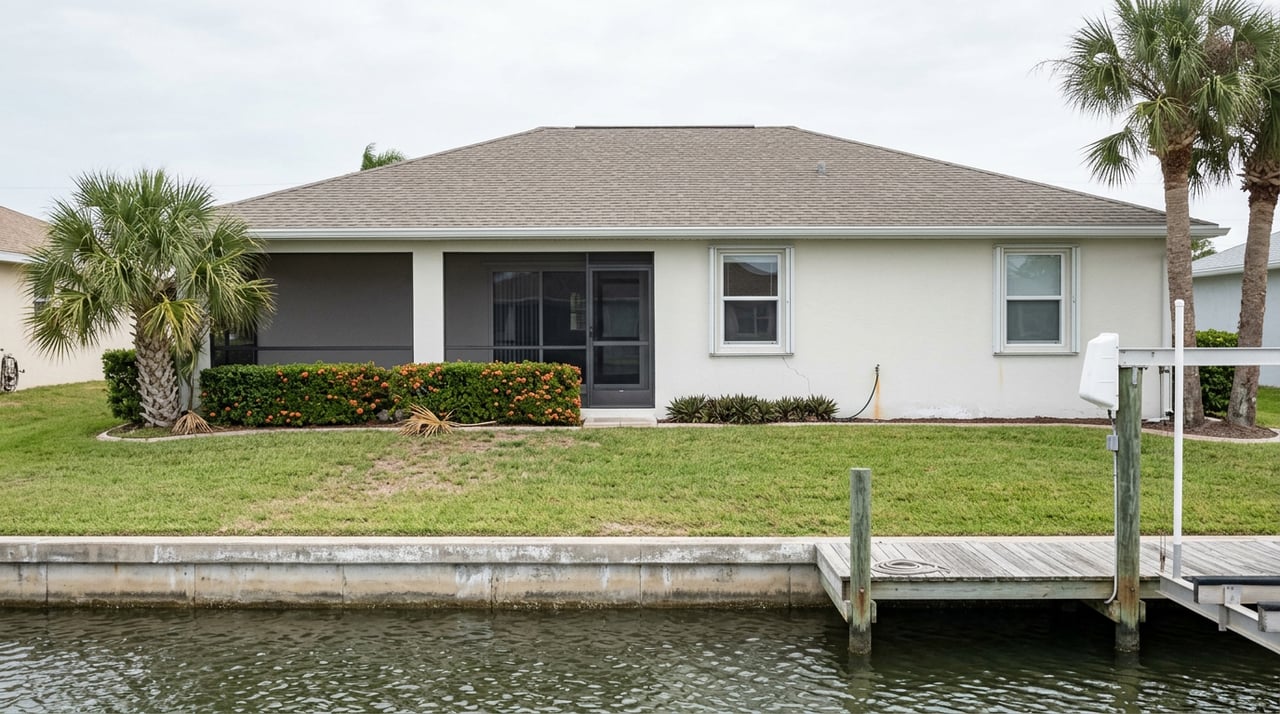
A property owner named Ferris S. Waller Sr., acting as trustee for a house on Mangrove Drive in Hernando Beach, sat in the Hernando County Commission Chambers on July 8, 2025, appealing a building official's notice that the structure was unsafe. The house sits in a waterfront section known for direct Gulf access, full seawalls, and private docks, the kind of address that shows up in listing photos with a boat tied up out back. Almost a year after Hurricane Helene and Hurricane Milton hit within two weeks of each other in the fall of 2024, county records tied to that property described a FEMA-documented mitigation plan calling for the home to be raised from slab-on-grade to open-piling construction, roughly 11.9 feet in the air.
That number is not a renovation choice. It is the output of a federal formula that most buyers browsing Hernando Beach canal homes right now have never heard of, and it is still actively shaping which older waterfront properties here get repaired for a reasonable sum and which ones face a full structural rebuild before anyone can move back in.
The Rule Nobody Reads Until a Storm Hits
Hernando County's own floodplain notice lays out the mechanism plainly: if the cost to restore storm damage to a structure equals or exceeds fifty percent of that structure's market value before the damage occurred, the whole building has to be brought up to current flood code, not just the damaged part. That almost always means elevating the lowest floor at least one foot above base flood elevation. This is the Substantial Damage rule, and it exists because of Hernando County's participation in the National Flood Insurance Program.
Here is the detail buyers tend to miss. The fifty percent threshold is measured against the structure's value alone, not the land, and not the price you paid. A canal lot can carry real value even if the house sitting on it is assessed low, which means a modest, older home can trip the fifty percent line with a repair bill that would barely dent a newer, higher-value structure.
Hurricane Helene pushed six to nine feet of surge along this stretch of coast according to National Hurricane Center data, and a sensor near Pine Island recorded water more than eight feet above the mean higher high water line. County officials confirmed at a November 12, 2024 town hall at Weeki Wachee High School that damage assessment teams were actively flagging properties in flood zones for review, with Hernando County Senior Planner Omar DePablo and County Administrator Jeff Rogers fielding resident questions about what came next.
Why Older Canal Homes Have Less Room to Work With
Much of Hernando Beach was platted and built in the late 1950s through the mid 1960s, well before Florida's modern flood-code era. Homes from that period tend to sit at or near grade, without the piling elevation you see in newer coastal builds. That construction era is exactly why the fifty percent math cuts hardest here. An older slab home with a lower assessed structure value needs a much smaller repair bill to reach its fifty percent ceiling than a newer, elevated home with a higher structure value would.
That is the piece worth sitting with if you are shopping a storm-affected listing right now. The home that looks like the better deal because the damage looks moderate on paper can be the one with the least room before the county's determination letter arrives and the project becomes a full elevation job.
Here is a rough timeline of how this has played out locally:
| Date | What happened |
|---|---|
| September 26, 2024 | Hurricane Helene makes landfall, pushing storm surge across Hernando Beach and the surrounding coast |
| October 9, 2024 | Hurricane Milton follows two weeks later, compounding flood damage across the county |
| November 12, 2024 | Hernando County holds a public town hall at Weeki Wachee High School to walk residents through substantial damage rules |
| April 2025 | Florida's Elevate Florida mitigation fund closes its application window after drawing over 12,000 applications statewide |
| July 8, 2025 | A Hernando Beach property owner on Mangrove Drive appeals an unsafe building notice tied to a mandated elevation plan |
The rule itself is not new and it is not unique to Hernando Beach. What is worth knowing today, in September 2026, is that the pipeline behind it has not caught up.
The Renovation Trap: Substantial Improvement Works the Same Way
Storm damage is only one way to trigger this rule. The county applies the identical math to voluntary work. If you buy an older, unelevated canal home with no storm history at all and decide to gut the kitchen, add a primary suite, and redo the exterior, and the cumulative cost of that work reaches fifty percent of the structure's value, the county treats it as a Substantial Improvement. The result is the same as Substantial Damage: the whole house has to meet current floodplain code, including elevation.
This is where the financing picture gets harder than it did two years ago. Florida's Elevate Florida program was built to help homeowners cover this exact cost, splitting eligible mitigation projects on a standard basis where the state covers a large majority and the homeowner covers the rest. That program closed its application window in April 2025 after drawing more than 12,000 applications from 64 counties, and approvals have continued moving through review into 2026 at a pace well behind the volume that applied. If your renovation plan on an older Hernando Beach canal home crosses that fifty percent line today, you are largely funding the elevation requirement yourself, without the state cost-share that existed for the first wave of post-storm applicants.
What to Check Before You Write an Offer
None of this means older canal homes are off the table. Hernando Beach's boating access, canal depth, and dock infrastructure are exactly why buyers come here in the first place. It means the due diligence list needs one more line than it used to.
- Ask the seller directly whether the county has issued a Substantial Damage or Substantial Improvement determination on the property, and get it in writing rather than relying on a verbal answer.
- Request the current elevation certificate and compare the first floor height to the property's base flood elevation, since that gap tells you how much room exists before a future renovation could trip the fifty percent threshold.
- Ask whether the county's assessed structure value was used for any past determination, since that number can sometimes be challenged with a licensed appraisal if it looks understated relative to the home's actual construction.
- If the listing mentions storm repairs, ask for the permit history rather than assuming cosmetic work means no floodplain review occurred.
- Before budgeting a major renovation on an older, unelevated home, ask Hernando County's floodplain office what your specific structure's fifty percent number would be, so the design budget accounts for it from the start rather than discovering it mid-project.
- Understand that Elevate Florida is not currently accepting new applications, so factor the full elevation cost into your numbers rather than counting on a state cost-share that may not be available to you.
A Few Direct Questions
Does the fifty percent rule apply to the price I pay for the home? No. It applies to the county's assessed value of the structure itself, separate from land value and separate from your purchase price.
Can a homeowner push back on a county determination? Yes. The Mangrove Drive case is a direct example of a property owner appealing a county building determination to the Board of County Commissioners rather than accepting it outright.
Is there still state money available to help pay for a mandated elevation? Not for new applicants as of this writing. Elevate Florida closed its application window in April 2025, and the existing backlog has continued moving through review into 2026.
This is precisely the kind of detail that separates a good canal home purchase from an expensive surprise, and it is the sort of thing worth walking through on the actual water rather than over a listing sheet. Gulf Coast Fishing Homes spends time on Hernando Beach's canals for a living, checking depth, dock condition, and the paperwork that follows a storm. Start with a canal tour and we will look at the property, the permit history, and what it would actually take to bring it up to code before you make an offer.