Buying a waterfront home in Hernando Beach is exciting, but the financing side can get technical fast. A canal-front property may look perfect for your boat and lifestyle, yet the deal can hinge on flood insurance, elevation details, and how the lender classifies the home. If you want fewer surprises before closing, this guide will show you what lenders and insurers usually focus on in ZIP code 34607 and what questions to ask early. Let’s dive in.
Why waterfront financing works differently
When you buy in Hernando Beach, your lender is not just looking at your credit, income, and down payment. They also need to confirm the home can be properly insured and documented by closing. On waterfront homes, that often makes insurance a core financing issue, not just a budget item.
Standard homeowners insurance and flood insurance are not the same thing. Flood coverage is separate, and lenders may require it depending on the property’s flood designation and loan type. That means a home that seems affordable on paper can carry a very different monthly payment once insurance is added.
Flood insurance can affect loan approval
For many waterfront buyers, flood insurance is part of the loan conversation from day one. Fannie Mae requires flood insurance when a property is in a Special Flood Hazard Area, a Coastal Barrier Resources System area, or an Otherwise Protected Area. It accepts NFIP policies and qualifying private flood policies.
Fannie Mae also ties minimum flood coverage to the lesser of the replacement cost, the NFIP maximum, or the original unpaid principal balance or loan amount. In plain English, the lender is making sure the property has enough flood coverage to meet its guidelines. That can directly affect what you need to secure before closing.
Home type matters to lenders
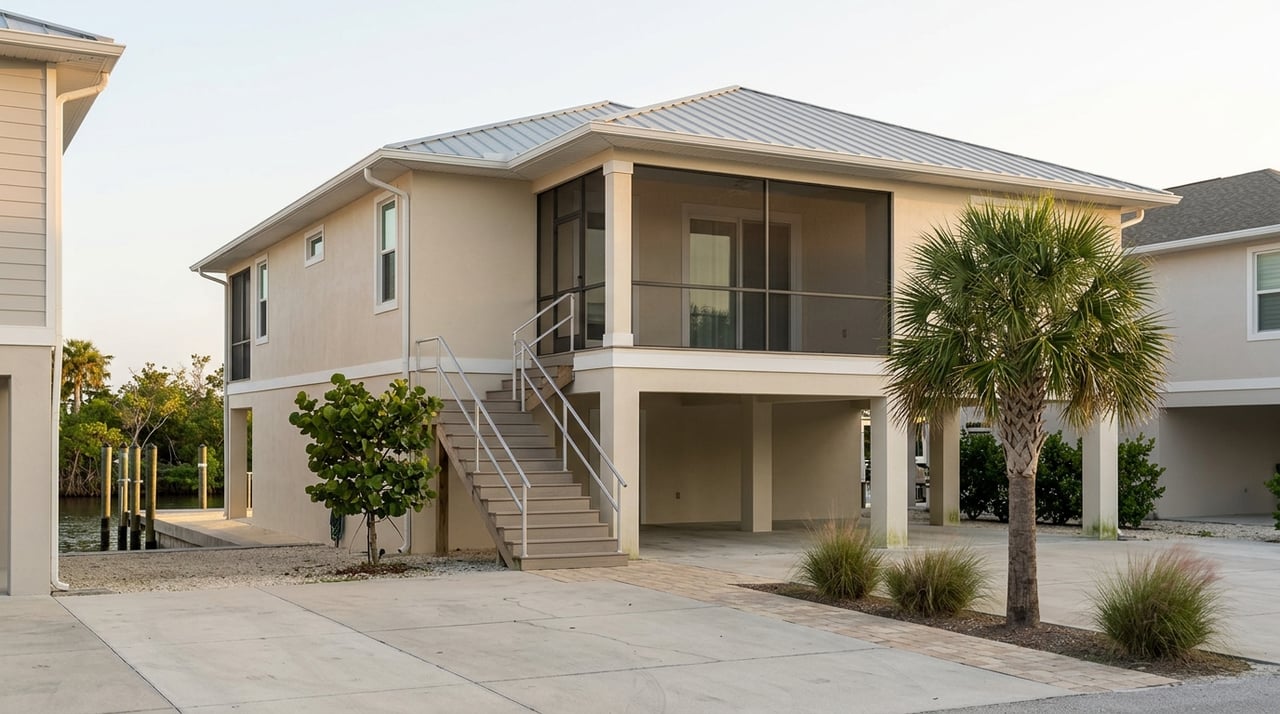
Not every waterfront property is treated the same in underwriting. If the home is a standard site-built residence, the path is usually more straightforward than it is for a manufactured home or another non-standard setup. Lenders may take a closer look at title status, foundation details, and whether the home meets eligibility rules.
For manufactured homes, Freddie Mac says the home must be titled as real property and permanently affixed to a foundation to be eligible. Fannie Mae also requires factory-built units to be permanently attached to a foundation that meets local code and manufacturer requirements. If you are looking at a waterfront home with a less typical construction type, this is something to confirm early.
Waterfront features may show up in appraisal
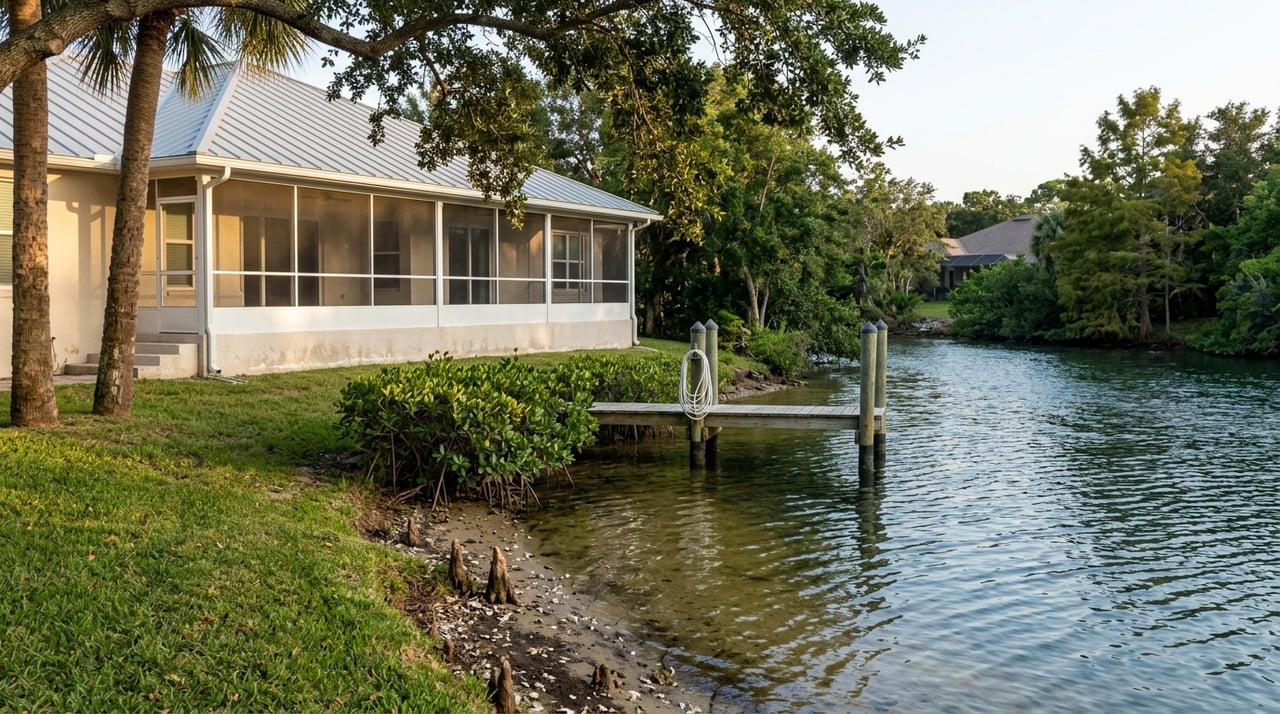
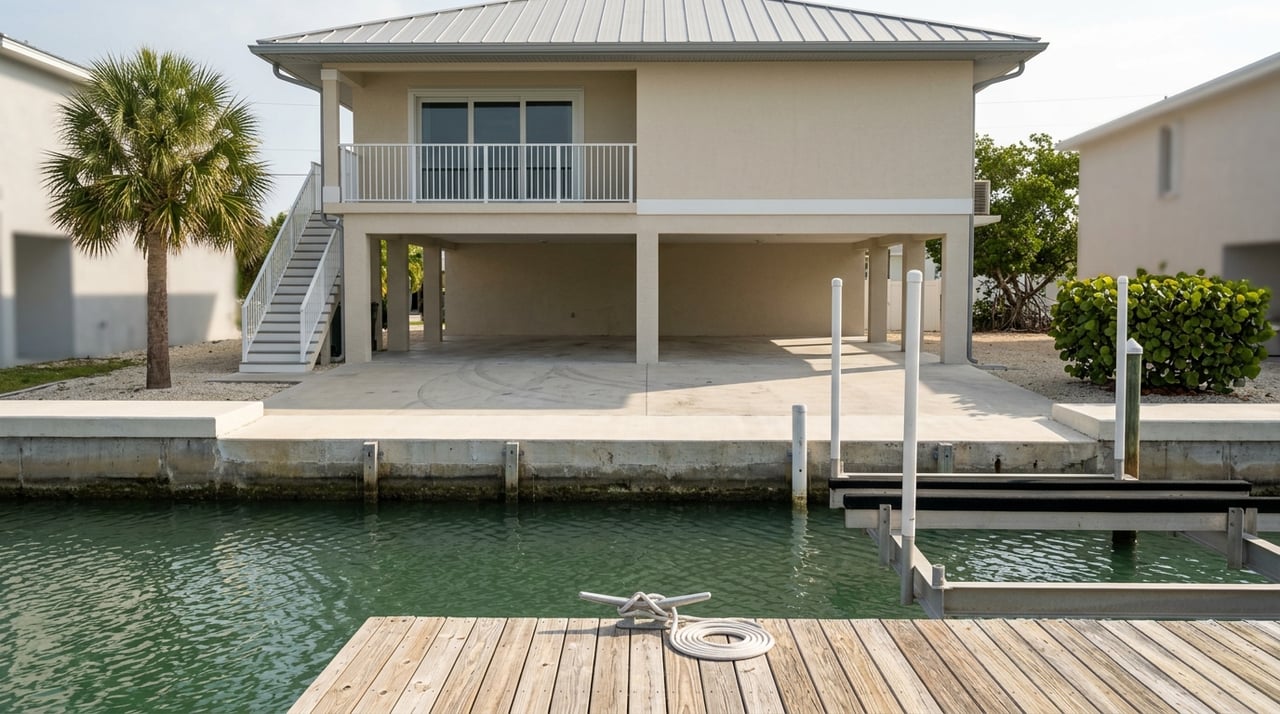
In Hernando Beach, the waterfront features that make a property appealing to boaters can also show up in lender documentation. Property data standards used by Freddie Mac and Fannie Mae specifically identify items like seawalls, docks, piers, boat lifts, and boat slips. Those improvements may need to be photographed and documented as part of the file.
That does not automatically create a problem, but it does mean buyers should expect more detail around these features. If a seawall, dock, or lift is important to your purchase, it is smart to verify both condition and permit history before you get too far into the process.
Monthly costs are more than principal and interest
A lot of waterfront buyers focus on rate and down payment first. In Hernando Beach, the more meaningful number is often your full monthly housing cost, including insurance and escrow items. The Consumer Financial Protection Bureau notes that monthly housing payments can include homeowners insurance, flood insurance, mortgage insurance, taxes, and HOA dues.
For waterfront homes, flood coverage can materially change your payment even if your interest rate stays the same. That is why it helps to ask for a realistic monthly estimate early instead of waiting for a final loan worksheet near closing.
Florida insurance costs have multiple layers
On a waterfront purchase in 34607, you may be budgeting for several different insurance-related costs at once. Homeowners insurance covers certain risks, but flood damage is typically excluded and handled through a separate flood policy. In Florida, flood insurance is usually purchased separately, although private options may be available as a stand-alone policy or by endorsement.
You also need to understand your hurricane deductible. In Florida, insurers must offer hurricane deductible options of $500, 2%, 5%, or 10% of the dwelling limit, subject to certain exceptions. On a $300,000 home, a 2% hurricane deductible means $6,000 out of pocket before coverage begins for a hurricane claim.
Wind-mitigation credits may help
Some buyers can reduce part of their premium through wind-mitigation credits. These discounts apply to the wind portion of the policy premium and depend on documented features such as shutters, impact-resistant openings, hip roofs, and compliance with the Florida Building Code. The required documentation comes from a qualified inspector using the Uniform Mitigation Verification Inspection Form.
There is one important limit to know. Citizens says wind-mitigation discounts are not offered for mobile homes. So if you are comparing different home types in Hernando Beach, insurance treatment may vary in ways that affect your long-term cost.
What flood insurance may not cover
Many buyers assume their waterfront improvements are automatically protected. That is not always the case. FEMA’s Standard Flood Insurance Policy exclusions list seawalls, bulkheads, wharves, piers, bridges, and docks as property that is not insured under the standard policy.
That matters in a boating market like Hernando Beach, where a dock, boat lift, or seawall can be a big part of the property’s value and usefulness. You should ask your insurance professional exactly what is covered, what is excluded, and whether any improvements need separate consideration.
Hernando Beach due diligence before closing
Local due diligence matters because parcel-level conditions can differ, even within the same area. Hernando County says FEMA’s Flood Insurance Rate Map is the official source for flood-zone determinations, but the county also maintains local watershed data that can affect development and may not appear on FEMA maps. The county advises buyers and owners to contact the Zoning Division for accurate zoning and elevation requirements.
That is one reason broad assumptions can be risky. A home near another property with similar water access may still have different elevation or floodplain details. In waterfront buying, the right answer usually comes from the parcel, not the reputation of the street or canal.
Check flood zone early
Before you write an offer or lock in loan expectations, verify the property’s flood zone. Hernando County says its floodplain rules work with the Florida Building Code, and local floodplain information can affect development beyond what appears on FEMA maps. FEMA’s map system remains the official federal source for flood hazard information.
If the property falls in Zone A or Zone V, an elevation certificate may become part of the insurance or underwriting file. FloodSmart notes that most homeowners do not need one, but homes in high-risk Zone A and high-risk coastal Zone V may need one to verify compliance with local safety standards.
Review elevation documentation
Elevation can influence both underwriting and flood premium pricing. FloodSmart says pricing depends on more than flood zone alone and may also reflect how the property is built and what it would cost to replace. An elevation certificate can help document first-floor height and may lower premiums in some higher-risk cases.
If you are comparing two homes with similar canal access, elevation details may help explain why insurance quotes differ. That is worth understanding before you decide one home is clearly the better deal.
Verify docks, seawalls, and lifts
Waterfront improvements deserve their own review. Hernando County’s fee schedule lists permits for docks, boat lifts, retaining walls, and seawalls, and the county provides a permit portal plus property-history search for current and legacy permits. That gives you a practical way to verify whether key improvements appear in the public record.
Condition matters too. Even if a feature helps the property stand out, you still want to know whether it has been properly permitted and whether any maintenance issues could affect your budget after closing.
Questions to ask your lender
The right questions can save you time, stress, and last-minute surprises. When you are buying a Hernando Beach waterfront home, ask your lender:
- Is this property eligible for conventional, FHA, VA, or portfolio financing?
- Is the home being treated as site-built, elevated site-built, or manufactured housing?
- Will flood insurance be required based on the current FEMA map and the lender’s flood determination?
- Will you require an elevation certificate, foundation certification, or title conversion documentation?
- What will the escrowed monthly payment include besides principal and interest?
Questions to ask your insurance professional
You also want a clear picture of the annual and monthly insurance impact. Ask your insurance agent or broker:
- What are the annual premium and estimated monthly escrow amount for homeowners insurance and flood insurance?
- Is the flood policy NFIP, Write-Your-Own, private admitted, or surplus lines?
- What is the hurricane deductible, and is it a percentage deductible?
- Are wind-mitigation credits available, and what documentation is needed?
- Does the policy cover contents, detached structures, and any additional living expense coverage?
- Are the dock, seawall, boat lift, or other waterfront improvements covered, excluded, or handled separately?
Timing matters more than many buyers expect
Do not leave flood insurance shopping for the last week before closing. The Florida Chief Financial Officer says a new flood policy generally has a 30-day waiting period. There are exceptions when the policy is purchased in connection with making, increasing, extending, or renewing a loan, or when a policy is assumed by a new owner.
Even so, waiting too long can create unnecessary pressure. If the home is in a Special Flood Hazard Area and your mortgage is federally backed, flood insurance is typically a closing condition. Early quotes can make your loan planning much more accurate.
Why local guidance helps in Hernando Beach
In a boating-focused market like Hernando Beach, the financing and insurance details connect directly to how you plan to use the property. A canal-front home with a boat lift, seawall, and Gulf access may check all the lifestyle boxes, but the closing process still depends on the boring details being handled well. That includes flood-zone verification, improvement records, insurance structure, and realistic monthly payment planning.
If you want help sorting through the waterfront questions before they become closing problems, a local specialist can make the process a lot smoother. When you are ready to talk through canal access, seawalls, docks, flood insurance, and the real-world buying process in Hernando Beach, start with a canal tour with Greg Klesius.
FAQs
What insurance is usually required for a Hernando Beach waterfront home?
- You will typically need standard homeowners insurance, and you may also need separate flood insurance depending on the property’s flood designation and your lender’s requirements.
Does standard homeowners insurance cover flood damage in Hernando Beach?
- No. Flood damage is generally not covered by standard homeowners insurance, so flood coverage is usually purchased separately in Florida.
Can flood insurance change my monthly payment on a 34607 home?
- Yes. Flood insurance is often included in escrow along with homeowners insurance, taxes, and other housing costs, so it can significantly affect your true monthly payment.
Do Hernando Beach buyers need an elevation certificate?
- Not always, but homes in higher-risk areas such as Zone A or Zone V may need an elevation certificate for underwriting, compliance, or insurance pricing purposes.
Are docks and seawalls covered by standard flood insurance on waterfront homes?
- Usually not under the standard flood policy. FEMA lists items like seawalls, piers, docks, and similar structures as excluded property.
Where should you verify flood-zone and permit details for a Hernando Beach property?
- Use FEMA’s official flood hazard mapping resources for flood-zone information, and check Hernando County sources for parcel-level floodplain, zoning, elevation, and permit history details.